

The branded search is the one that converts
There is a search that happens near the end of almost every considered purchase. Someone has a recommendation, a proposal or a business card, and they search the name to check. That search has enormous commercial weight and receives a fraction of the attention that category keywords do.
If that page shows a current website, healthy reviews, a couple of legitimate mentions and nothing alarming, the decision proceeds. If it shows a site that looks abandoned, a stale review profile or something worse, it quietly stops — and you never learn why, because nobody calls to say they searched you and decided against it.
That is where we start, and it is the connective tissue between search work and our reputation management practice. They are the same problem approached from two directions.
Organic search

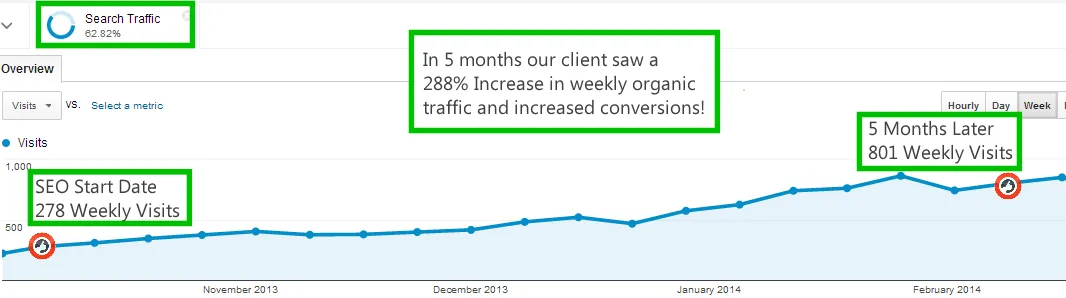
The unglamorous fundamentals, done properly, still outperform most cleverness.
- Technical health. Fast pages, correct indexation, working structured data, sane URL structure, no accidental blocking. This is table stakes and it is routinely broken — often in ways nobody notices for years.
- Content with a reason to exist. Pages that answer questions your prospects genuinely ask, at enough depth to be worth ranking. A page of three hundred words restating a dictionary definition will not rank and does not deserve to.
- Authority earned rather than bought. Legitimate coverage, genuine partnerships, content other people cite because it is useful.

Local search
For businesses serving a defined area, local is where the volume is. It behaves differently from national search: proximity, category accuracy and review signals matter more than raw domain strength, which means a smaller business can win positions a much larger competitor cannot.
Practically: a properly configured and actively maintained Google Business Profile, correct and consistent name/address/phone data across the directories that feed the ecosystem, category selection that matches what people search rather than how you describe yourself internally, and review velocity that keeps the profile looking alive.
We maintain dedicated local practices in the Inland Empire, San Diego and Los Angeles.
Paid search
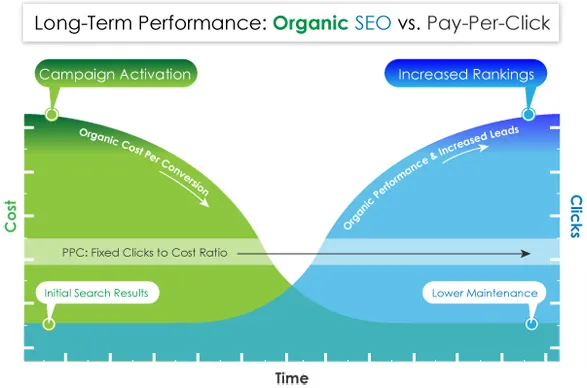
Paid media is the fastest way to buy visibility and the fastest way to waste money, and the difference is mostly scope discipline. We favour tightly-defined campaigns on high-intent terms over broad category bidding, negative keyword lists that are actually maintained, landing pages built for the specific query rather than the homepage, and conversion tracking that works before spend starts rather than after.
Paid also has a specific reputation use: when something unflattering is ranking organically and displacement will take months, a paid placement can occupy the top of the page in the interim. It is a stopgap rather than a solution, but it is a genuinely useful one while slower work proceeds.
Retargeting, and its limits
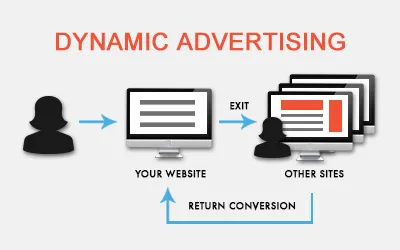
Most visitors leave without doing anything, and retargeting is the cheapest way to reach the ones who were interested but not ready. It works best on a short window and a capped frequency. Run indefinitely at high frequency it stops being a reminder and starts being an irritation — which, for a business whose concern is how it is perceived, is a genuine cost rather than a theoretical one.
Measurement
Reporting against what actually matters: enquiries, calls and qualified leads. Impressions and average position are diagnostic tools, not results, and a report built primarily from them is usually concealing the absence of the other kind.
Analytics get configured at the start of an engagement, not retrofitted later. Work that is not measured tends to continue long after it has stopped producing.